Memory Game Canva Templates Free for Pro: A Strategic Asset for Education and Engagement
In the landscape of digital content creation, efficiency often hinges on the ability to leverage pre-designed assets that align with specific workflow goals. For educators, corporate trainers, event planners, and parents managing homeschool curricula, Memory Game Canva Templates Free for Pro represent more than just a collection of graphics; they are a functional starting point for interactive learning and engagement strategies. These templates streamline the design process, allowing users to focus on content customization rather than layout construction. Whether you are preparing a math lesson for a classroom, designing a team-building activity for a workshop, or creating educational materials for home schooling, these resources fit seamlessly into a broader planning and execution framework.
The value of these templates lies in their adaptability. They serve as a bridge between conceptual planning and tangible output. By utilizing Memory Game Canva Templates Free for Pro, creators can bypass the initial friction of blank canvas syndrome, moving quickly from idea generation to asset deployment. This acceleration is critical when working within tight deadlines or when producing multiple variations of a game for different skill levels or age groups. The integration of these templates into your workflow ensures consistency in branding and visual quality while significantly reducing the time required for production.
Integrating Templates into Your Planning Workflow
Effective use of design assets begins long before opening the software. When incorporating Memory Game Canva Templates Free for Pro into a project, the process should start with clear objective setting. Are you aiming to reinforce vocabulary, practice number recognition, or test memory retention in a corporate setting? Defining the goal dictates which template structure is most appropriate. For instance, a math-focused session requires a template with ample space for numerical symbols, whereas a language arts activity might prioritize text clarity and font legibility.
Once the objective is defined, the selection phase involves reviewing the available library. While many options are accessible to free users, the Pro designation often unlocks a wider array of premium elements, such as exclusive illustrations, advanced photo effects, and brand kit integrations. If you have a Canva Pro account, you gain access to features that allow for deeper customization, ensuring the final product aligns perfectly with your existing visual identity. Even without a Pro subscription, the free versions of these templates offer robust functionality, provided you select elements that do not require a paid upgrade. It is essential to audit the template components early in the planning stage to avoid mid-project roadblocks where a desired element is locked behind a paywall.
Preparation also involves gathering the necessary content. Before customizing the template, compile your image sets, word lists, or mathematical equations. Having this data ready allows for a fluid transfer into the design interface. This "content-first" approach prevents the common pitfall of forcing information into a design that does not support it. By organizing your assets beforehand, you transform the template editing process into a straightforward assembly task, enhancing overall efficiency.
Customization and Adaptation Strategies
The true power of Memory Game Canva Templates Free for Pro lies in their modularity. Users are not limited to using the designs exactly as they appear; rather, these templates are intended to be adjusted to fit specific needs. This flexibility is particularly valuable in educational contexts where differentiation is key. A single base template can be adapted for various proficiency levels by altering the complexity of the matching pairs.
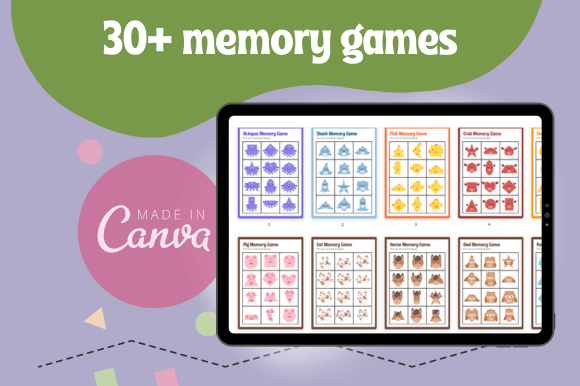
For educators focusing on math and shapes, the templates provide a structured grid that can be easily modified. You can replace generic icons with geometric shapes, fractions, or algebraic expressions. The drag-and-drop interface of Canva makes this substitution intuitive. Furthermore, color schemes can be adjusted to suit visual preferences or to accommodate students with specific visual processing needs. High-contrast colors, for example, can improve visibility for younger children or those with visual impairments.
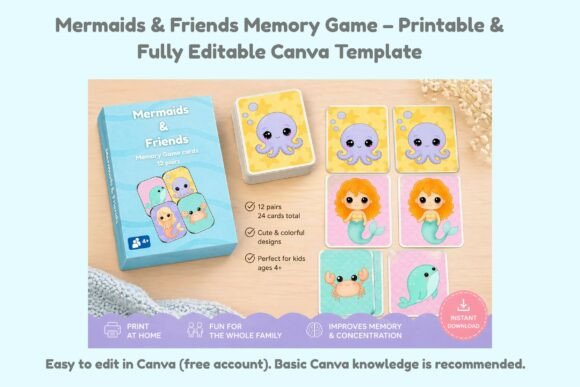
It is also worth noting that the elements within these templates can be extracted and repurposed for other designs. A character illustration used in a memory card can be resized and utilized in a worksheet header, a presentation slide, or a reward certificate. This cross-utilization maximizes the return on investment for the design effort. When working with Memory Game Canva Templates Free for Pro and Education, consider building a personal library of reusable assets derived from these templates. Over time, this creates a cohesive ecosystem of educational materials that share a consistent aesthetic, reinforcing brand or curriculum identity.
Optimizing for Different Environments
Different environments demand different formats. In a traditional classroom, printed cards are often the standard. However, in remote learning scenarios or hybrid work models, digital interactivity becomes paramount. The versatility of these templates allows for both outcomes. For physical distribution, ensure the design is set to print-ready dimensions (such as US Letter or A4) and that all images are high-resolution to prevent pixelation upon printing. For digital delivery, the same template can be exported as an image sequence or integrated into a digital slideshow where students interact via screen sharing or tablet apps.
When adapting for homeschool settings, the workflow shifts slightly towards parental convenience. Parents often need materials that are quick to prepare and easy to clean up. Using Memory Game Canva Templates Free for Pro allows for rapid iteration. If a child masters a concept quickly, a parent can instantly swap out the content for a new challenge without needing to redesign the entire layout. This agility supports a responsive learning environment where the pace is dictated by the learner's progress rather than rigid curriculum pacing.
Workflow Integration and Tool Synergy
To maximize the utility of these templates, they should not exist in isolation. They function best when integrated with other tools and platforms commonly used in education and business. For example, once a memory game is designed in Canva, it can be exported and uploaded to Learning Management Systems (LMS) like Google Classroom, Canvas, or Moodle. This seamless transition from design platform to delivery system ensures that the content reaches the end-user efficiently.
Furthermore, these templates can interact with assessment tools. After a student completes a memory game activity, the results can be documented in a spreadsheet or tracked through a digital portfolio. The visual consistency provided by the templates helps in maintaining professional records. For entrepreneurs and marketers, these games can be part of a larger lead magnet strategy or a branded giveaway at trade shows. By embedding QR codes directly into the design, users can link physical cards to digital resources, bridging the gap between offline interaction and online engagement.
Collaboration is another critical aspect of the workflow. Canva's real-time collaboration features allow multiple team members to work on a single project simultaneously. A teacher might draft the content while a colleague focuses on the visual styling, or a marketing team could brainstorm game mechanics while another member handles the layout. This collaborative capability enhances the quality control process, ensuring that the final output meets all pedagogical or branding standards before deployment.
Ensuring Quality Control and Long-Term Usability
Maintaining high standards is essential when reusing templates over time. Regularly review your customized versions to ensure they remain relevant and error-free. Check for spelling mistakes, outdated references, or broken links if exporting digital versions. Consistency in design elements—such as fonts, color palettes, and icon styles—contributes to a professional appearance that builds trust with the audience, whether they are students, clients, or employees.
Long-term usability also depends on file organization. Save your customized templates in clearly labeled folders within your Canva dashboard, categorized by subject, grade level, or project type. This organizational structure saves significant time when revisiting past projects or scaling up successful activities. Additionally, keeping a master copy of the original template separate from your customized versions ensures you always have a clean slate to work from for future iterations.
Finally, consider the accessibility of your designs. Ensure that the contrast ratios are sufficient for readability and that the text size is appropriate for the intended audience. These factors contribute to an inclusive experience, making the memory game accessible to a wider range of users. By prioritizing these quality control measures, you ensure that your use of Memory Game Canva Templates Free for Pro yields sustainable results and continues to add value to your workflow over the long term.
In conclusion, these templates are a practical solution for anyone looking to enhance engagement through interactive design. By understanding how to integrate them into your planning, customize them effectively, and connect them with broader workflows, you can create high-quality educational and business assets with minimal effort. Whether you are a professional educator, a homeschooling parent, or a creative entrepreneur, leveraging these resources allows you to focus on what matters most: the content and the impact it has on your audience.