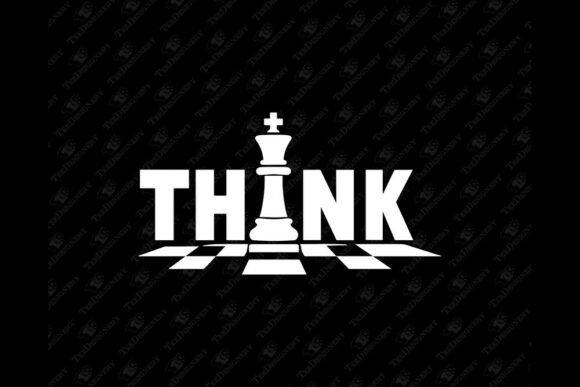
Think Chess Game Winning Mindset: A Strategic Framework for High-Stakes Decision Making
In the high-velocity environment of modern business and personal development, reactive decision-making is a liability. The Think Chess Game Winning Mindset represents a shift from impulsive action to calculated strategy. It is not merely about winning a game; it is about approaching life's complex challenges with the foresight, patience, and tactical precision of a grandmaster. This mindset demands that you visualize multiple moves ahead, anticipate opposition, and understand that every action carries a weight that extends far beyond the immediate moment. For entrepreneurs, marketers, and professionals aged 20 to 50, adopting this perspective is often the differentiator between fleeting success and sustainable dominance.
The core philosophy is encapsulated in the phrase: Move silent, think savage. This does not imply aggression without cause, but rather the discipline to execute plans with absolute clarity while maintaining a low profile until the optimal moment for revelation. In a world saturated with noise, the ability to operate quietly while planning aggressively allows you to control the narrative and the outcome. Whether you are launching a new product, negotiating a contract, or restructuring a team, the principles of chess provide a robust mental model for navigating uncertainty.
The Architecture of Strategic Foresight
To truly leverage the Think Chess Game Winning Mindset, one must first understand the architecture of strategic foresight. In chess, a player never moves a piece without considering the resulting board state three, four, or even five turns later. Translating this to professional life means evaluating the long-term implications of current decisions. A marketing campaign launched today might yield immediate traffic, but does it damage brand equity in six months? A cost-cutting measure might improve quarterly profits, but does it erode employee morale and innovation capacity?
This level of depth requires a departure from linear thinking. Instead of asking, "What is the best move right now?", the strategist asks, "What sequence of moves leads to the desired endgame?" This approach transforms decision-making from a series of isolated events into a cohesive narrative. When you apply the Think Chess Game Winning Mindset to your operations, you begin to see patterns and opportunities that others miss because they are too focused on the immediate threat or opportunity. You start to value position over material gain, understanding that a strong strategic position often yields greater rewards than a quick, tactical win.
Positioning and Long-Term Value
Positioning is the cornerstone of any successful strategy. In chess, controlling the center of the board grants mobility and influence. In business, controlling the market narrative or a key technological standard provides similar advantages. The Think Chess Game Winning Mindset encourages you to sacrifice short-term gains to secure a superior long-term position. This might mean delaying a product launch to perfect the user experience, or investing heavily in customer education before attempting to scale sales.
Consider the concept of "sacrifice." A chess player will sometimes offer up a valuable piece to open lines of attack or disrupt the opponent's defense. Similarly, a savvy entrepreneur might divest from a profitable but non-core division to focus resources on a high-growth area. This counter-intuitive move appears risky to the untrained eye but is a calculated maneuver within the Think Chess Game Winning Mindset. It signals a commitment to the ultimate objective rather than temporary comfort. By prioritizing long-term value, you build resilience against market fluctuations and competitive pressures.
Operationalizing the Silent Move
The instruction to "move silent" is perhaps the most challenging aspect of this philosophy to implement. In an era where social media demands constant broadcasting and transparency, silence can be misinterpreted as weakness or stagnation. However, true power lies in the element of surprise. When competitors know your strategy, they can prepare defenses. When you operate in silence, you retain the initiative.
Practically, this involves rigorous internal communication coupled with external discretion. Your team needs to be fully aligned on the vision and the plan, but the public reveal should happen only when the execution is flawless. For example, a software developer working on a disruptive algorithm should not announce the project until the beta is ready for deployment. This prevents copycats from rushing to market with inferior versions and ensures that the launch generates maximum impact.
Adopting the Think Chess Game Winning Mindset in this context requires emotional discipline. You must resist the urge to seek validation through premature announcements. Instead, find satisfaction in the quality of your preparation. The "silent move" builds anticipation and respect. When you finally act, the market reacts to your results, not your promises. This approach is particularly effective for creators and freelancers who need to differentiate themselves in crowded niches. By delivering work that exceeds expectations without prior hype, you establish a reputation for reliability and excellence.
Tactical Execution and Risk Management
While the mindset emphasizes long-term planning, it also demands acute attention to immediate tactics. Every move in chess changes the landscape, creating new risks and opportunities. In business, this translates to agile risk management. Even the best-laid plans must adapt to real-time data. The Think Chess Game Winning Mindset does not advocate for rigid adherence to a plan at all costs; rather, it suggests having a clear framework within which you can pivot intelligently.
Risks arise when the strategy lacks context. Applying chess logic blindly to situations that require empathy, rapid iteration, or creative chaos can lead to paralysis by analysis. Not every problem is a puzzle to be solved with cold calculation. Sometimes, speed is more important than perfection. Therefore, before relying on this mindset, assess the nature of the challenge. Is it a strategic battle requiring deep thought, or a skirmish requiring swift action? Understanding the stakes helps determine the appropriate level of deliberation.
Furthermore, there is a risk of isolation. If you move too silently, you may lose touch with market sentiment or fail to build necessary alliances. The "savage" thinking must be balanced with collaborative intelligence. Use your network to gather information without revealing your hand. Listen more than you speak. Gather intelligence on competitor movements, customer pain points, and emerging trends. This information feeds your strategic engine, allowing you to refine your moves before you make them public.
Integrating Strategy into Daily Practice
For the Think Chess Game Winning Mindset to become second nature, it must be integrated into daily routines. Start by dedicating time each day to "board review." Analyze your current projects, identify potential threats, and map out the next few steps. Ask yourself critical questions: What am I assuming? What could go wrong? How would my competitor respond to this action? This practice sharpens your analytical skills and reduces the likelihood of costly errors.
Visual aids can also enhance this process. Just as a chess player studies the board, a professional should utilize tools that help visualize workflows and outcomes. For instance, if you are involved in design or branding, high-quality visual representations can clarify complex strategies. Consider assets like high-resolution graphics designed for specific applications, such as sublimation printing. While seemingly tangential, the precision required to create a 300 DPI image sized at 5000 x 5500 px mirrors the precision needed in strategic planning. These assets, often created with the help of AI tools, represent the intersection of creativity and technical specification. They remind us that execution matters as much as the idea itself. When you present a strategy, the quality of your presentation materials reflects the quality of your thinking.
Moreover, foster a culture of strategic thinking within your organization. Encourage team members to think several steps ahead. Reward those who identify potential pitfalls before they occur. Create an environment where "moving silent" is understood as a sign of professionalism, not secrecy. When everyone operates with a shared sense of purpose and foresight, the collective output becomes significantly more powerful.
Avoiding Common Pitfalls
One of the primary dangers of the Think Chess Game Winning Mindset is the tendency to over-analyze. Paralysis by analysis occurs when the fear of making a wrong move prevents any move from being made. In dynamic markets, indecision is often more dangerous than a mistake. The goal is not to predict the future with 100% accuracy—that is impossible—but to increase the probability of success through better preparation.
Another pitfall is arrogance. Believing you have seen every possible variation can lead to complacency. The chess master knows that the game is always evolving, and so must the strategist. Stay humble, remain curious, and be willing to adjust your course based on new information. The "savage" aspect of the mindset refers to the ruthlessness of execution, not the dismissal of feedback or alternative viewpoints.
Finally, ensure that your goals are clear. A strategy without a defined objective is just random activity. Before you begin your "chess game," define what victory looks like. Is it market share? Profitability? Brand recognition? Social impact? Without a clear definition of the endgame, your moves will lack direction and coherence. The Think Chess Game Winning Mindset is a tool for achieving specific outcomes, not an end in itself.
Conclusion: Mastering the Game
Embracing the Think Chess Game Winning Mindset is a journey toward becoming a more deliberate, effective, and resilient leader. It requires you to look beyond the horizon, to value silence over noise, and to execute with precision. By applying these principles to your goals, planning, and decision-making processes, you position yourself to navigate complexity with confidence. Remember, the game is not won by the loudest player, but by the one who sees the board most clearly. Move with intention, think with depth, and let your results speak louder than your words.