Puzzle Kids Educational Game Worksheet: A Practical Evaluation for Parents and Educators
In the landscape of early childhood development, the tools chosen to facilitate learning can significantly influence a child's engagement and cognitive growth. The Puzzle Kids Educational Game Worksheet represents a specific category of printable resources designed to bridge the gap between traditional paper-based activities and interactive digital design. For parents and educators aged 20 to 50 who are actively comparing educational aids, understanding the distinct value proposition of this worksheet format is essential before integrating it into a curriculum or home routine.
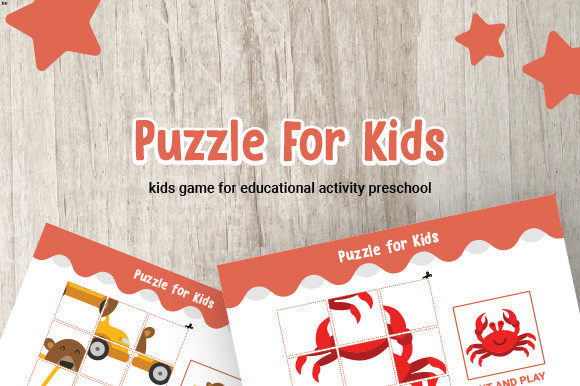
Unlike generic coloring pages or simple mazes, the Puzzle Kids Educational Game Worksheet is engineered with a dual purpose: it serves as an immediate activity for children and a flexible asset for adults managing educational content. The core concept involves cut-and-glue mechanics, a tactile approach that has proven effective in developing fine motor skills. However, the modern iteration of this resource often includes high-resolution vector graphics, making it distinct from standard low-quality printables found on many free websites.
Understanding the Format and Technical Specifications
To evaluate whether the Puzzle Kids Educational Game Worksheet fits your needs, one must first examine its technical composition. This resource typically comes as a comprehensive package containing 10 JPEG files at A5 size with a resolution of 300 DPI, alongside a single PDF file consolidating all pages. The inclusion of a vector graphic component, editable in software like Adobe Illustrator, sets it apart from static image collections.
The 300 DPI resolution is a critical factor for quality assurance. When printing educational materials, clarity is paramount. Lower resolution images can result in jagged edges when cut, which frustrates young children and diminishes the perceived value of the activity. The A5 format (approximately 5.8 x 8.3 inches) is particularly practical for young hands, offering a manageable surface area that prevents the task from becoming overwhelming while still providing enough space for detailed puzzles.
The ability to edit the source files in Adobe Illustrator introduces a layer of customization rarely found in standard worksheets. This feature allows educators or tech-savvy parents to modify colors, text, or puzzle pieces to suit specific learning objectives or cultural contexts. For instance, if a classroom requires a puzzle featuring local landmarks instead of generic animals, the vector format makes this adaptation possible without compromising image quality.
Tactile Learning Versus Digital Alternatives
When comparing the Puzzle Kids Educational Game Worksheet to other educational methods, the primary distinction lies in the medium of interaction. In an era dominated by tablets and apps, screen-free activities offer a necessary counterbalance. The cut-and-glue nature of these worksheets engages proprioception and hand-eye coordination in ways that tapping a glass screen cannot replicate.
Digital puzzle games often provide instant feedback and animated rewards, which can be highly engaging. However, they frequently lack the physical resistance required to develop pincer grasp strength and dexterity. The Puzzle Kids Educational Game Worksheet requires a child to physically manipulate scissors, tear paper, apply adhesive, and place pieces with precision. This process builds neural pathways associated with fine motor control, a foundational skill for writing and other manual tasks.
Conversely, digital alternatives excel in scenarios where portability and battery life are concerns, or when adaptive difficulty levels are needed for diverse learning speeds. While the printable worksheet offers a fixed challenge level per page, digital tools can dynamically adjust complexity. Therefore, the choice between the two often depends on the specific developmental goal: if the objective is motor skill refinement and sustained focus without electronic distractions, the worksheet is superior. If the goal is rapid exposure to varied concepts or accessibility for children with limited mobility, digital options may be more appropriate.
Comparing Customization and Cost Efficiency
A significant decision factor for families and schools is the balance between cost and flexibility. Commercially produced puzzle books are widely available but come with limitations; once purchased, the content is static. If a child masters the concepts quickly, the book becomes obsolete. The Puzzle Kids Educational Game Worksheet, particularly with its editable vector components, offers a different economic model.
While there may be an initial acquisition cost for the digital files, the ability to reprint pages indefinitely provides long-term value. Furthermore, the customizable nature means the resource can evolve with the child's interests. For example, a parent might alter the text on a puzzle piece to reinforce a specific vocabulary word being taught that week. This adaptability reduces the need to purchase multiple specialized workbooks over time.
However, this flexibility requires a trade-off in terms of time and technical skill. Utilizing the Adobe Illustrator files demands access to specific software and a basic understanding of vector editing. For users who prefer a "plug-and-play" experience, the pre-formatted PDF and JPEG files serve as a ready-to-use alternative. These users sacrifice the ability to customize content but gain immediate convenience. It is important to weigh whether the potential for customization justifies the learning curve or software costs involved.
Educational Outcomes and Skill Development
The efficacy of the Puzzle Kids Educational Game Worksheet extends beyond simple entertainment. The structured nature of cut-and-paste puzzles supports several key developmental areas. First, problem-solving is inherent in the task; children must visualize how fragmented pieces form a cohesive whole. This spatial reasoning is a precursor to mathematical thinking and geometry.
Second, the activity fosters patience and persistence. Unlike fast-paced video games, assembling a paper puzzle takes time. Children learn to manage frustration when a piece does not fit immediately, encouraging a growth mindset. The tangible result—a completed puzzle glued onto a page—provides a sense of accomplishment that reinforces self-efficacy.
Additionally, these worksheets can be easily integrated into thematic units. Whether the theme is seasons, animals, or numbers, the visual consistency of the vector graphics ensures that the aesthetic remains professional and appealing. This consistency helps maintain a child's interest across multiple sessions, allowing for repeated practice of the same skills with varying content.
Limitations and Considerations for Implementation
Despite its strengths, the Puzzle Kids Educational Game Worksheet is not a universal solution. One notable limitation is the requirement for adult supervision, particularly during the cutting phase. Younger children may struggle with safety regarding scissors, necessitating active parental involvement. This contrasts with some digital apps that include built-in safety features or voice guidance.
Furthermore, the static nature of the printed material means it lacks interactivity beyond the physical manipulation. There are no sound effects, animations, or scoring systems to gamify the experience. For children who are heavily motivated by external digital rewards, the quiet satisfaction of a paper puzzle might initially seem less stimulating. Parents may need to invest extra effort in framing the activity as a collaborative game rather than a solitary task.
Another consideration is the environmental impact. While reusability is possible through reprinting, the consumption of paper and glue should be weighed against digital-only solutions. However, for many households already utilizing printers for schoolwork, the marginal increase in waste is minimal compared to the developmental benefits gained.
Determining the Best Fit for Your Needs
Deciding whether the Puzzle Kids Educational Game Worksheet is the right choice involves assessing your specific context. If you are an educator looking for a versatile resource that can be adapted for different class sizes and learning levels, the editable vector format offers significant advantages. The ability to create custom versions for individual students can support differentiated instruction effectively.
For parents seeking to reduce screen time while maintaining high engagement, this worksheet provides a robust alternative. The combination of clear, high-resolution images and tactile requirements makes it suitable for quiet time, travel (if pre-cut), or dedicated homework sessions. The A5 size is particularly advantageous for small spaces, such as car seats or small desks, where larger posters or books would be cumbersome.
However, if your priority is zero-preparation activities or if you lack access to a printer and cutting tools, this option may present logistical hurdles. In such cases, pre-made physical puzzle sets or subscription-based digital apps might offer a smoother user experience. Additionally, if the goal is purely artistic expression rather than structured problem-solving, open-ended drawing materials might be more beneficial than the constrained nature of a puzzle worksheet.
Ultimately, the Puzzle Kids Educational Game Worksheet stands out as a hybrid tool that merges the reliability of print media with the adaptability of digital design. By understanding its technical specifications, educational benefits, and inherent trade-offs, adults can make an informed decision about its role in their child's learning journey. Whether used as a standalone activity or part of a broader educational strategy, its capacity to foster motor skills and cognitive development remains a compelling reason for consideration.